



14
August
August
Applications of PTFE and PFA Lined Piping Systems Across Process Industries
No two corrosive process environments operate the same way. A bulk chemical
facility pumping aggressive acids faces a completely different challenge than a
pharmaceutical plant handling sterile, high-purity media.
Agrochemical manufacturing, wastewater treatment, and semiconductor processing
all have their own specific operational hurdles.
Yet despite these differences, many of these facilities ultimately rely on the
same PTFE and PFA lined piping systems to solve a single problem: protecting the
process from the fluid and the fluid from the process.
Why PTFE and PFA Lined Piping Systems Are Used Across Industries?
The shared reliance comes down to one fundamental requirement: the fluid
handling system has to perform reliably under corrosive operating conditions.
Whether the line carries aggressive acid or demands strict contamination
prevention, the piping network cannot fail.
PTFE and PFA lined systems bridge a challenge that process industries have faced
for decades: combining the structural strength of metallic piping with the
chemical resistance required to safely handle aggressive process media.
That specific combination allows one piping philosophy to support completely
different process environments.
Unplanned degradation halts production. These linings provide a
corrosion-resistant barrier , ensuring safe fluid transfer without exposing the
structural steel to continuous attack.
Chemical, Petrochemical and Refining Applications
Heavy industrial environments push high volumes of aggressive chemicals through
complex routes. Petrochemical facilities rely on massive transfer lines,
constant branch connections, and frequent flow transitions.
In these environments, the reliability of the process often depends less on a
single component and more on how the entire transfer network performs as one
system.
The Engineered Fluid Pathway
- Lined Pipe Spools : Form the structural backbone of these transfer networks, pairing the strength of steel with complete fluoropolymer protection.
- Concentric / Eccentric Reducer : Minimizes turbulence and pressure loss when the piping layout forces a transition between different diameters.
- Lined Ball Valve : Handles precise flow control and bubble-tight pipeline isolation under harsh industrial conditions.
When configuring these complex transfer lines, Designing Chemical Distribution
Networks for Corrosive Process Systems becomes a priority for process engineers
ensuring safe media routing.
Pharmaceutical and Biotech Processing Applications
High-purity environments flip the operational priorities. Bulk transfer volume
matters less than strict contamination prevention, highly controlled batch
transfers, and safe reactor operations.
Charging a glass-lined reactor safely is critical; if the media touches exposed
metal, the sterile environment is compromised.
Pure Fluid Management
- Lined Dip Pipe & Drop Tube : Installed vertically into vessels to facilitate controlled bottom transfer. This design protects structural integrity exactly at the liquid interface zones where vapor exposure and aggressive corrosion occur.
- PFA Lined Ball Valves : Selected for their specialized zero-cavity, full-bore design. They safely handle both high-pressure and high-vacuum applications without creating fluid stagnation zones or letting material become trapped.
Agrochemical, Chloroalkyl and Specialty Chemical Applications
Specialty chemical manufacturing deals with extreme chemistry and highly
unpredictable solids.
Process routing in these plants must account for debris. If solids travel
unchecked through the system, they will destroy downstream instrumentation and
pumps.
Inline Equipment Protection
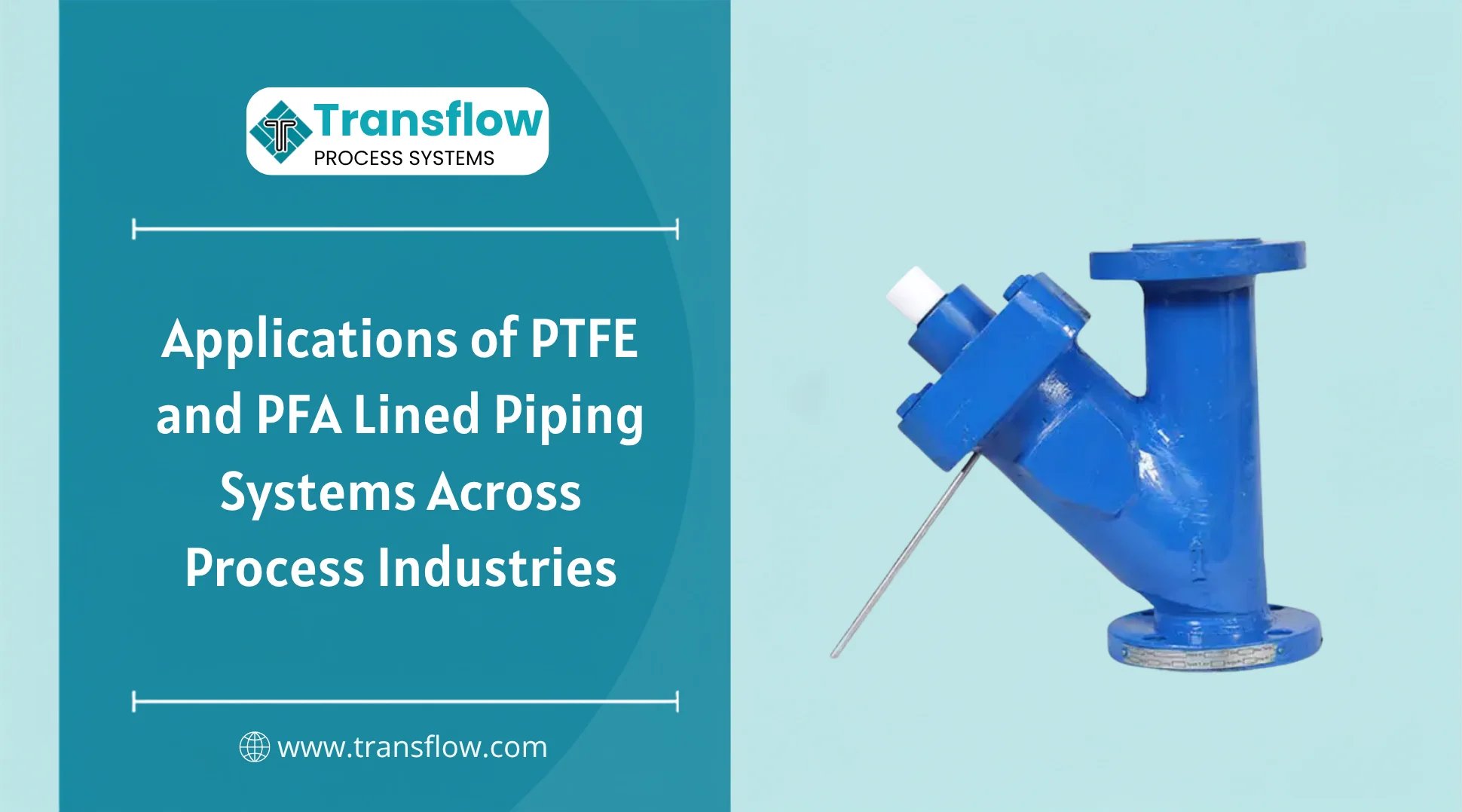
- PTFE Lined Y-Type Strainer : Installed directly inline to provide mechanical filtration. It effectively separates solid particulates without exposing the actual strainer housing to chemical attack.
- System Integration : Working alongside lined spools and reducers, these strainers keep flow conditions clean, protecting expensive inline equipment like pumps and control valves from debris damage.
Wastewater, Semiconductor and Specialized Process Applications
Not all corrosive media is predictable. Wastewater treatment
facilities and semiconductor plants handle wildly variable chemical streams
where process conditions can change by the hour.
Guaranteeing Operational Reliability
Maintaining corrosion resistance through the collection, transfer, and treatment
stages is the only way to guarantee operational reliability.
The near-universal corrosion resistance of fluoropolymer linings allows these
facilities to manage unpredictable chemical mixtures and highly aggressive
effluent pipelines safely.
It keeps the process fully contained and prevents environmental
exposure across the entire treatment infrastructure.
Selecting PTFE and PFA Lined Piping Systems for Different Process Industries
Industry differences aside, system compatibility always dictates
long-term performance.
In corrosive service, system reliability is rarely determined by
the strongest component. It is usually determined by the weakest one.
Sourcing reliable Lined Pipes Fittings and Valves in India means
looking closely at how well these parts actually integrate.
A complete lined system only works when every single component
from the main transfer pipe down to the final isolation valve provides uniform
protection.
Many of the long-term reliability issues discussed in Why Lined Piping Systems Fail in Corrosive Service can
ultimately be traced back to incompatibility within the piping system itself.
If your facility requires engineered fluid handling solutions for aggressive media, Contact Us to discuss lined systems tailored to your specific process environment.