



15
July
July
Maintaining Reliable Reactor Drainage in Corrosive Chemical Systems
The reaction is complete, the agitator has slowed, and the batch is ready for
transfer. In an ideal plant, emptying a process vessel is a straightforward
mechanical step. In reality, it is often the most unpredictable part of the
cycle.
Operators frequently deal with restricted flow, erratic discharge times, or a
lingering heel of unmixed product at the outlet. Finishing a chemical process is
one thing actually getting the product out of the tank is another.
Why Reliable Reactor Drainage Matters ?
The bottom outlet is the primary chokepoint of any reactor or storage tank. If
this junction fails to deliver a smooth discharge, the entire production
timeline stretches.
Turnaround time for the next campaign relies heavily on how quickly the current
batch can be evacuated. Every minute spent fighting a sluggish outlet directly
cuts into plant productivity and delays the next charge.
The Operational Impact of Incomplete Reactor Drainage
When residual product or solids accumulate at the vessel outlet, they form an
unmixed pocket that resists normal flow.
This hold-up doesn't just affect the yield of the current batch it complicates
the entire changeover process. Facilities dealing with poor drainage typically
face a specific set of bottlenecks:
- Extended clean-out operations that consume excess solvent and utility time.
- Product crusting or stubborn solids buildup requiring manual removal rather than standard wash cycles.
- Unplanned wear on downstream transfer equipment forced to handle inconsistent or starved flow.
Corrosive Service Changes the Drainage Requirements
These mechanical hurdles compound when the process media involves
aggressive acids, solvents, or corrosive mixtures.
While operators might use localized heating or physical agitation
to clear a standard tank outlet, corrosive service rarely permits those
workarounds. The structural housing of the drainage point is already under
continuous chemical attack.
Any unmixed zone that traps corrosive fluid accelerates internal
degradation. When aggressive media settles at the bottom flange, the localized
exposure time jumps drastically compared to the flowing pipeline above it.
This concentrated attack compromises the outlet's integrity and
drives premature equipment failure. Many of these challenges become more
apparent when examining Why Lined Piping Systems Fail in Corrosive Service.
Why Lined Flush Bottom Valves Become Critical?
Standard isolation valves are generally installed further down the pipework,
creating an inherent dead leg between the tank and the seal. To eliminate these
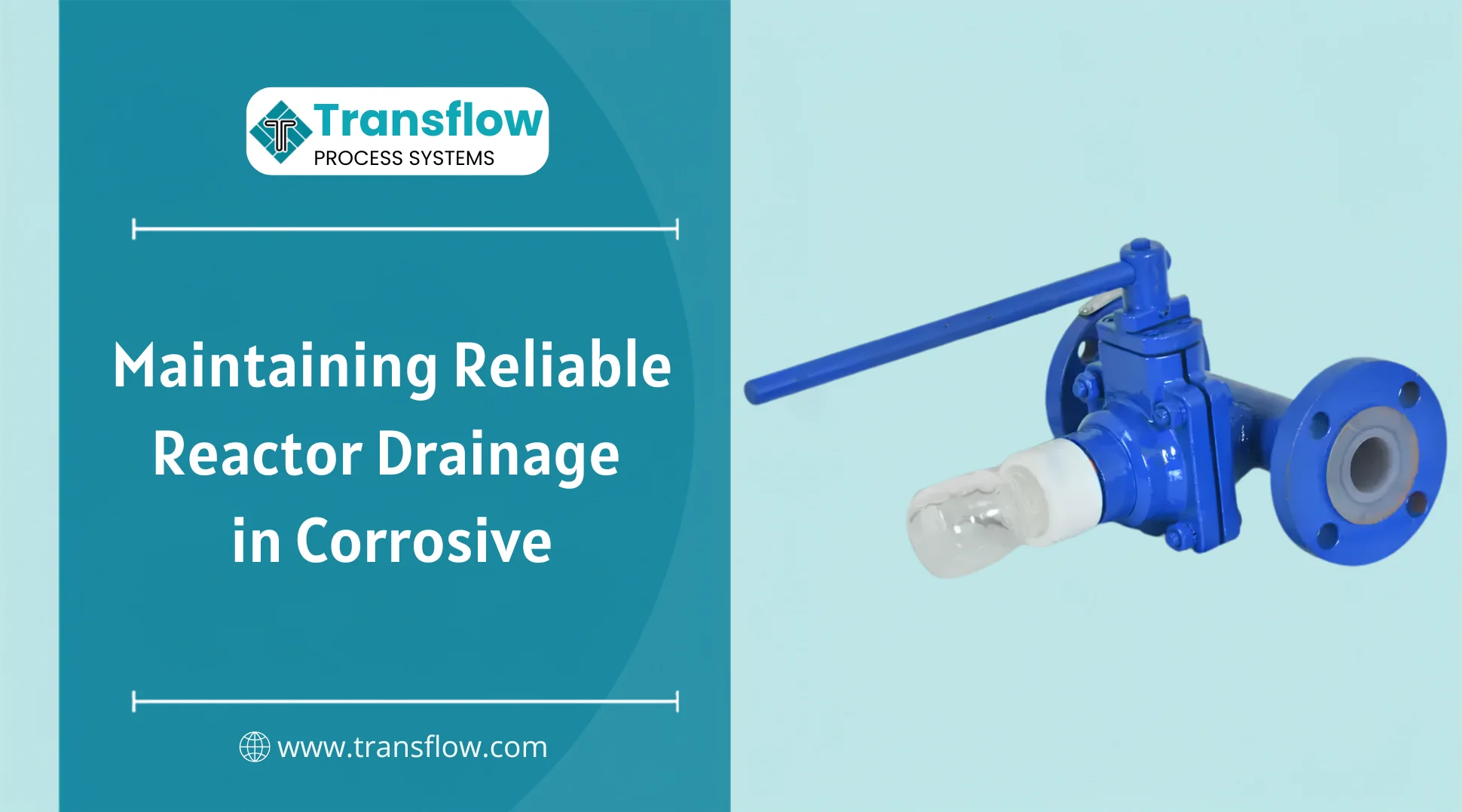
cavities, engineers mount a Lined Flush Bottom Valve directly at the lowest point of
the process vessel.
Sized for flush installation right against the bottom flange, this valve reduces
the areas where product can linger.
Keeping the closure mechanism virtually flush with the vessel interior supports
efficient emptying and minimizes unnecessary hold-up. This geometry is
specifically designed to reduce the spaces where solids typically settle and
crust over.
Geometry alone cannot survive aggressive fluids. An industrial PFA Lined Flush
Bottom Valve or a PVDF/FEP Flush Valve provides a chemically resistant lining
that protects the assembly from the process media.
This layer shields the structural housing from degradation while acids or
solvents drain from the tank.
During continuous discharge and clean-out cycles, maintaining a secure shut-off
is just as vital as clearing the tank. The valve must provide reliable shut-off
throughout repeated batch processing and waste disposal operations.
Sourcing reliable Lined Pipes, Fittings, and Valves in India requires balancing
this physical geometry with the appropriate chemical resistance.
Reliable Reactor Drainage Beyond the Valve
Discharge operations are influenced heavily by how a reactor is
initially charged. Engineers frequently use a Lined Dip
Pipe or a Lined Drop
Tube for vertical installation to allow safe bottom transfer.
This protects the structural integrity at the liquid interface
zones, where vapor exposure and corrosion are highly active.
Before initiating the drainage sequence, confirming process
parameters is a required step. Installing a Lined
Sampling Valve gives operators
the ability to verify batch quality without breaking the closed system, ensuring
the product is genuinely ready for transfer before the bottom outlet is ever
opened.
Building a Reliable Reactor Drainage System
Optimizing a reactor's discharge is about removing the structural dead zones
that disrupt the plant's rhythm. Smooth batch transfers increase product
recovery, shorten clean-out times, and get process vessels back into production.
Reliable drainage relies on an outlet arrangement built to support
consistent flow while withstanding the realities of corrosive service throughout
repeated operating cycles.
If incomplete reactor drainage and material buildup are extending
batch turnaround times in your facility,
Contact Us to discuss engineered solutions for corrosive chemical applications.