



25
June
June
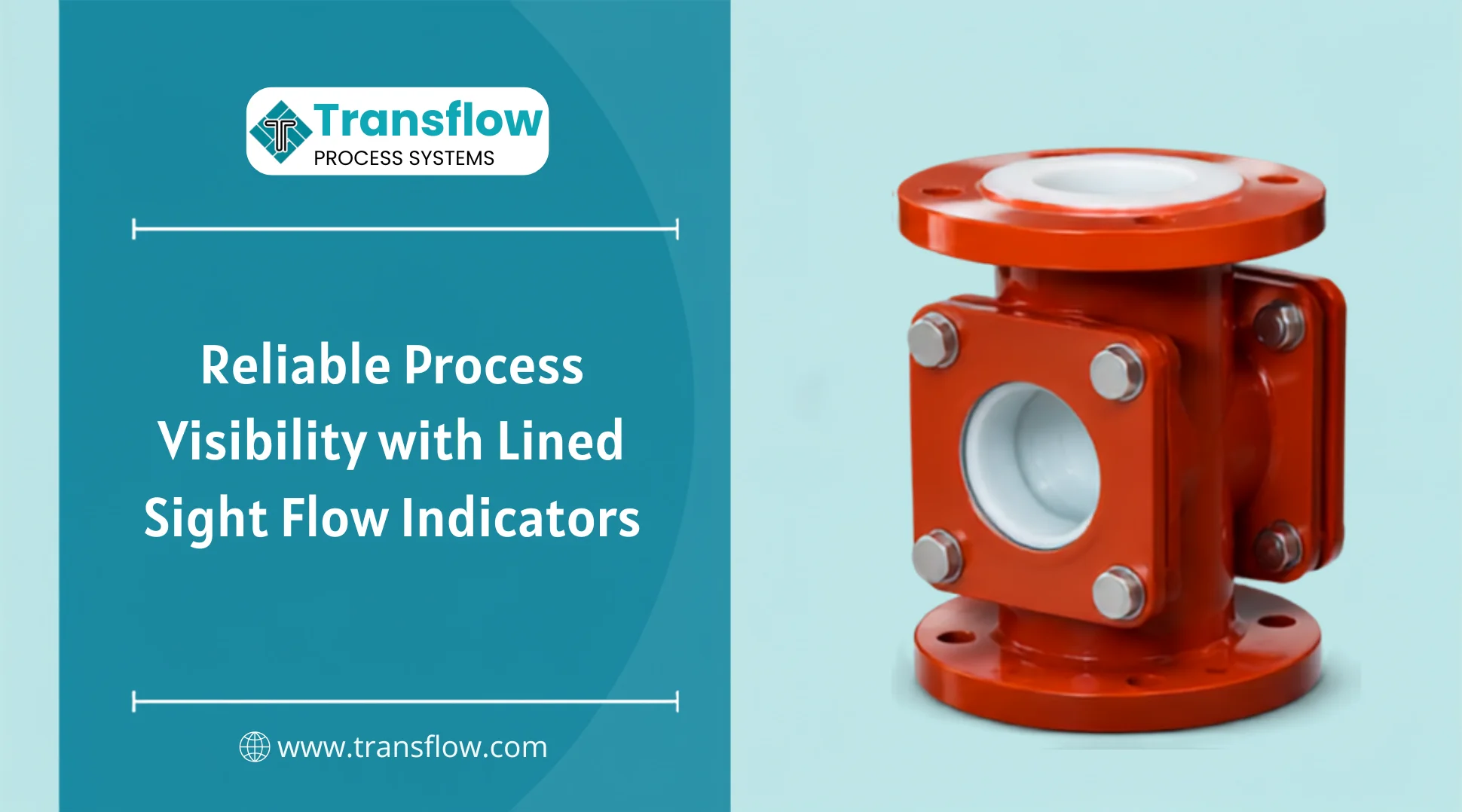
Reliable Process Visibility with Lined Sight Flow Indicators
Control rooms operate on the assumption that instrumentation tells the whole
story.
As long as the flow meter registers movement and the pump discharge pressure
holds steady, the process is assumed to be running smoothly. But experienced
operators know that digital feedback has limits.
When a batch transfer takes longer than calculated, or a pump
begins pulling excess amperage without a clear cause, numbers on a screen aren't
enough to diagnose the problem. Instead, someone has to walk out to the line and
physically verify what is moving through the pipe.
Why Do Corrosive Lines Still Require Visual Confirmation?
Troubleshooting often requires a physical look. Operators walk up to the line to
check for air bubbles, verify fluid color, or confirm whether a pump has
actually primed.
While seeing the process is straightforward, putting a window into a pressurized
chemical line introduces physical realities that digital instruments simply
don't have to deal with.
You are deliberately cutting into a secure pipe and patching it with glass and
seals, which means you have to implicitly trust the structural integrity of what
you are standing next to.
Where Do Viewing Assemblies Actually Fail?
When engineers discuss why
lined piping systems fail in corrosive service, the conversation usually
centers on joints and transitions. An inline window is essentially a highly
complex joint.
Looking through a window carrying hot acid is very different from looking at a
water line. Surprisingly, the glass itself usually isn't what worries people,
since these assemblies utilize toughened glass for process visibility. The real
concern sits around the edges:
- The steel housing supporting the assembly.
- The flange faces keeping the connections secure.
- The internal seals holding everything together under pressure.
Those are the areas that have to survive years of exposure. If
aggressive media starts eating away at the bare metal housing, the whole
assembly becomes something operators stop trusting.
Much like relying on a proper PTFE Lined Valve for secure
isolation, the viewing node itself must be physically engineered to survive the
fluid.
Material Selection is About Structural Survival
Nobody worries about a sight glass when things are running
normally. The concern begins when the process is aggressive and that small
viewing section becomes another critical component that must survive pressure,
harsh chemicals, and years of continuous operation.
This is exactly why a Lined Sight Flow
Indicator ends up in corrosive layouts.
These units operate by combining a chemical-resistant lining with
toughened glass. While the glass provides the necessary visibility, the internal
lining takes on the critical job of protecting the steel body from chemical
attack.
The lining does the heavy lifting inside a Sight Glass Flow
Indicator, keeping the process fluid away from the steel housing so the assembly
itself can survive years of service.
Depending on the specific line, facilities might utilize full view
designs or double window configurations, but the physical goal remains exactly
the same: keeping the fluid securely contained while allowing a clear line of
sight.
Are These Operating Realities Industry-Specific?
Whether the line is moving bulk acids in heavy chemical plants or handling batch
transfers in pharmaceutical manufacturing, the physical demands placed on the
viewing assembly are remarkably similar.
The industries may change, but the realities of corrosive service do not.
Operators still need to confirm flow. Engineers still need
confidence in the integrity of the assembly. And the observation point itself
still has to withstand pressure, aggressive media, and years of continuous
operation.
Facilities relying on Lined Pipes, Fittings, and Valves in India
know that a viewing assembly is only useful if it remains structurally intact
over the long term. Because when operators walk up to the line, they need to
trust what they are standing next to.
What Defines a Trusted Observation Node?
Reliable process monitoring isn't just about the clarity of the
glass; it is fundamentally about the integrity of the housing holding it.
When operators know the assembly is built to handle the acid,
troubleshooting becomes a routine task rather than a safety hazard.
If vulnerable observation points are becoming a recurring concern
in your facility, contact our
team to discuss suitable solutions for corrosive service applications.