



14
April
April
When to Use PFA Lined Jacketed Ball Valves for Temperature-Sensitive Fluids?
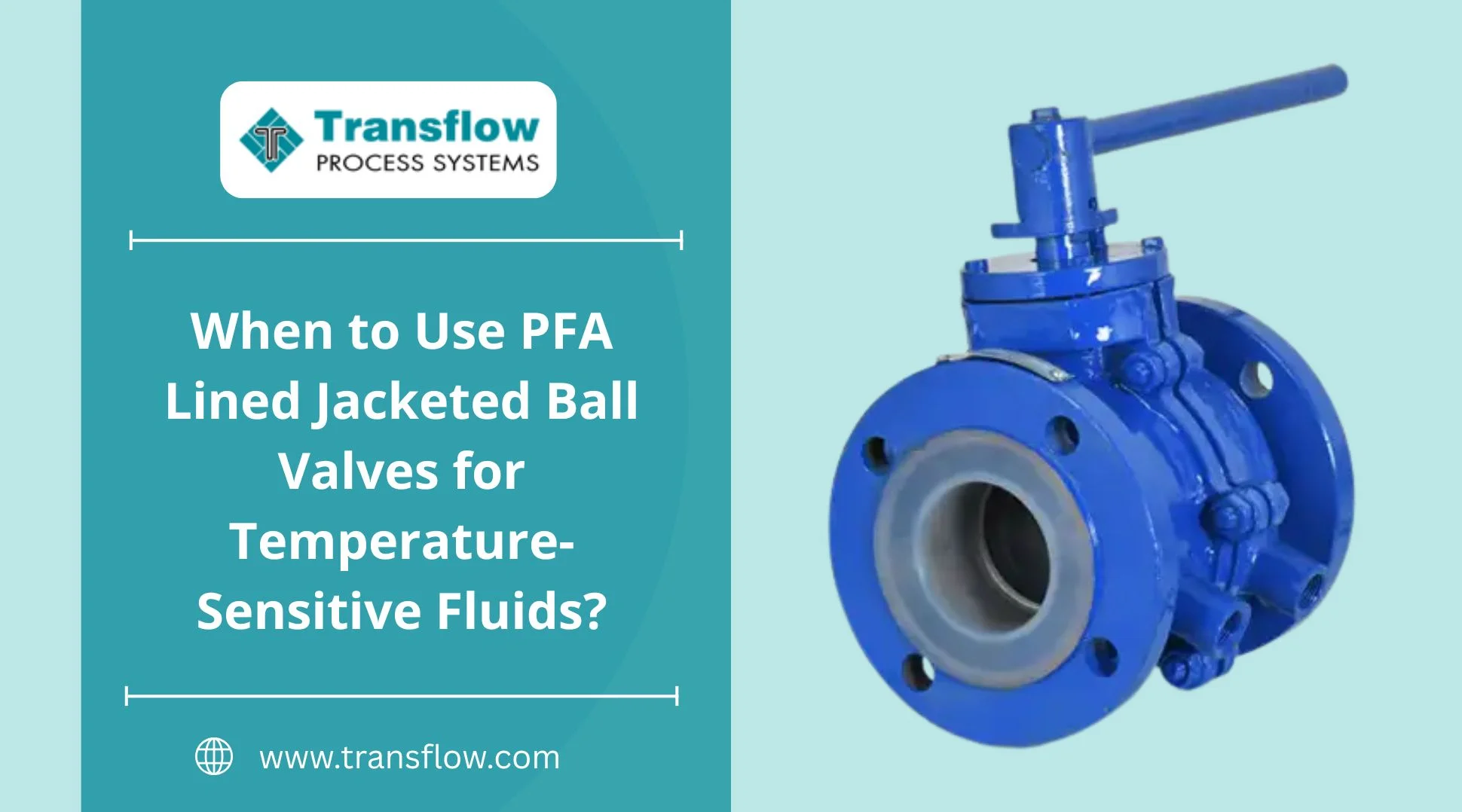
In chemical and pharmaceutical processing plants , maintaining fluid temperature
is a strict mechanical necessity, not just a process preference.
When handling temperature-sensitive chemicals, viscous polymers or active
pharmaceutical ingredients (APIs), ambient heat loss presents a severe risk to
plant infrastructure . A standard lined ball valve,
while offering robust
chemical resistance under typical conditions, frequently experiences accelerated
mechanical degradation when employed in thermal-dependent applications.
For facilities evaluating their Lined Valves in Vadodara, understanding exactly
how and why to upgrade to a jacketed system is critical to maintaining
continuous, safe operations.
The Vulnerability of Standard Rotary Valves
When a temperature-sensitive fluid traverses the pipeline and enters the valve
cavity, it is susceptible to rapid heat loss to the external environment.
As a temperature-sensitive fluid flows through the pipeline and enters the valve
cavity, it can rapidly lose heat to the surrounding environment.
When the temperature drops below the fluid's freezing or crystallization point,
the viscosity spikes. The media solidifies and packs tightly around the ball
inside the valve body.
When an operator or automated actuator attempts to turn the valve,
the solidified mass refuses to yield. The sheer mechanical torque required to
force the valve open frequently tears the internal fluoropolymer lining,
destroys the seals and compromises the valve's integrity.
The result is an immediate halt in production, a ruined batch and
a high risk of hazardous chemical leakage.
The Mechanics of Active Heat Retention
To prevent media from solidifying within the valve body, the mechanical solution
is active heat retention.
Upgrading to a PFA
lined jacketed ball valve introduces a secondary metal
enclosure the heating jacket around the core valve body. This design allows
maintenance teams to continuously circulate heating media directly over the
exterior of the valve housing.
This constant circulation eliminates cold spots. It ensures the
internal media remains at a stable temperature and maintains its intended
viscosity as it passes through the cavity. For process engineers sourcing a PFA
Lined Jacketed Ball Valve in Gujarat, this active thermal management is the
primary defense against internal crystallization.
Operational Triggers for Jacketed Valves
You must specify a jacketed lined valve rather than a standard
valve if the process meets any of the following operational thresholds:
- High Freezing Points: The chemical or agrochemical intermediate solidifies or crystallizes at standard ambient temperatures, causing immediate blockages.
- Viscosity Maintenance: The fluid must remain highly fluid to prevent downstream pump cavitation or excessive backpressure in the transfer line.
- Thermal Degradation: The process involves sensitive APIs or dye compounds that separate or degrade if the temperature fluctuates during transfer.
- Environmental Exposure The transfer lines run exterior to the facility and are subject to significant environmental temperature drops during night shifts or winter months.
Pipeline Integration and Thermal Continuity
A jacketed valve cannot function in isolation. If the surrounding pipeline
allows ambient heat loss, the fluid will simply crystallize before or after the
valve.
To maintain strict thermal control, the valve must be integrated into a fully
insulated line using lined
pipe spools. Integrating the heated valve with
insulated piping creates an Advanced PTFE Lined solution that protects the
fluid's thermal integrity continuously from the reactor vessel to the storage
tank.
Material Integrity Under Simultaneous Stress
Operating a jacketed lined valve subjects the equipment to intense simultaneous
stress. Aggressive chemicals on the inside and continuous high heat from the
external jacket. Poorly applied fluoropolymer linings will quickly blister,
permeate, or collapse under these severe thermal cycles.
To withstand these conditions, the manufacturing method of the
valve is critical. Transflow applies its Unique Lining
Process to ensure that the thick, seamless PFA layer remains firmly
bonded to the heavy-duty carbon steel shell.
This structural bond prevents vacuum collapse and blistering,
allowing the valve to perform safely under continuous thermal load.
Upgrading Your Thermal Infrastructure
Preventing mechanical blockages and thermal failures requires industrial-grade
components built to exact specifications. Partnering with a proven PTFE Lined
Pipe Manufacturer & Exporter in India ensures your infrastructure is
engineered
to handle these aggressive thermal cycles. A well-engineered PFA lined jacketed
ball valve protects your process from mechanical blockages and costly downtime.
Contact our technical team to
discuss your specific fluid dynamics and thermal
requirements.